MOT6 min read
What fails an MOT most often
A large share of MOT failures are for things you could have found yourself with a torch and ten minutes. Here is what testers actually fail cars for, and what to look at before it goes in.
By Kaine Carter
An MOT is not a health check and it is not a service. It confirms that the car met the minimum legal standard on the day it was tested. That is a low bar in some places and a surprisingly precise one in others, and knowing which is which is how you stop paying for a retest.
1. Lighting and signalling
The most common failure category, and almost entirely preventable. A blown bulb fails the test. So does a lens cracked enough to let water in, a number plate light that has stopped working, and a headlamp aimed too high or too low.
Walk round the car with somebody sitting in the driver's seat. Sidelights, dipped beam, main beam, both fog lights, indicators on both sides, hazards, brake lights including the high-level one, reverse light, number plate lights. A bulb costs a few pounds and five minutes; failing on one costs a retest and a second trip.
2. Suspension
The second biggest category, and the one you can do least about at home. Worn bushes, tired dampers, corroded springs and split gaiters all fail. A broken coil spring is common on British roads and often makes no noise at all.
What you can notice: a car sitting visibly lower on one corner, a knock over speed bumps, or a bounce that keeps going after you push down hard on a wing and let go. Any of those is worth having looked at before the test rather than during it.
3. Brakes
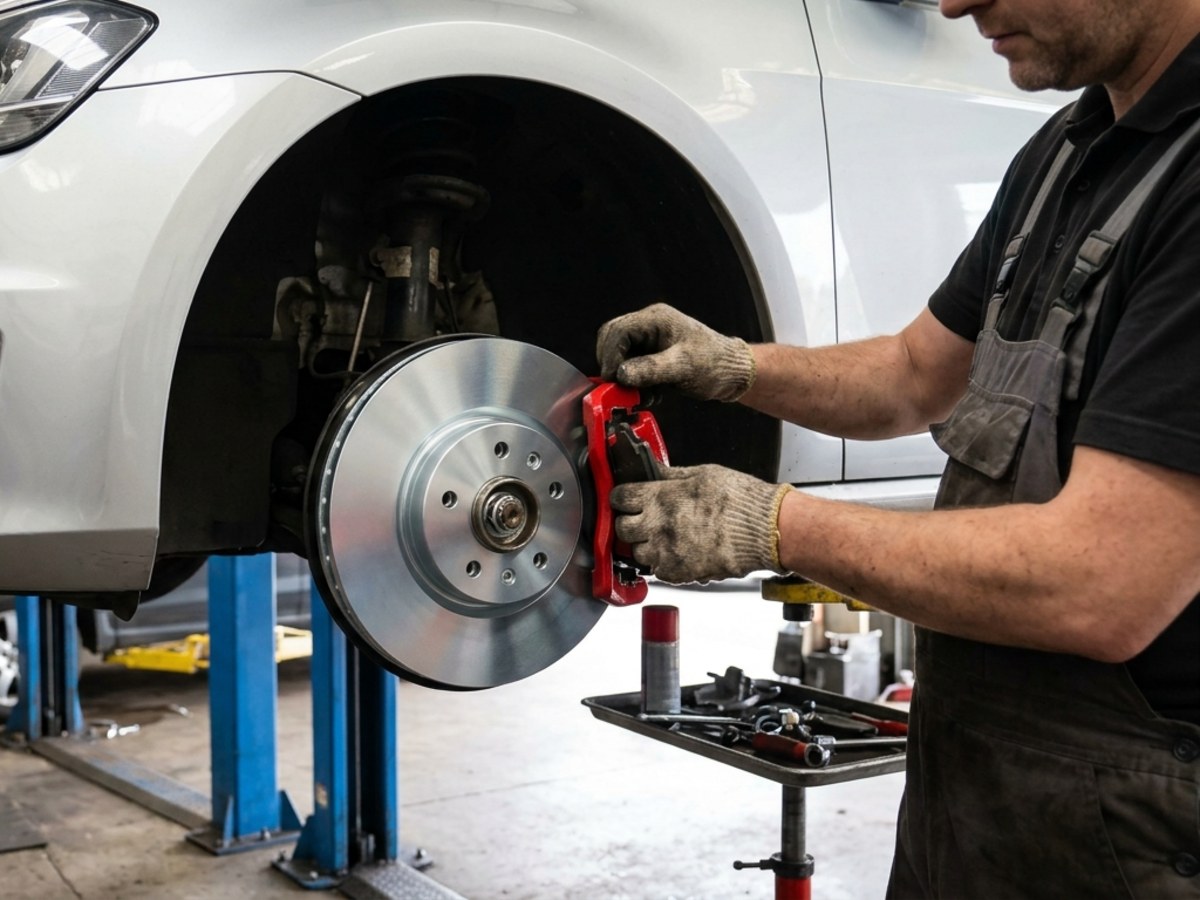
Brakes fail on efficiency, on imbalance between the two sides, and on the condition of the components themselves — a disc worn past its minimum thickness, a corroded pipe, a seized handbrake cable.
The signals are the ones you already know: a pedal travelling further than it used to, a car pulling to one side under braking, a handbrake needing more clicks than it did. A grinding noise means it has gone past pads and is a disc job as well.
4. Tyres
The legal minimum is 1.6mm of tread across the central three quarters of the tyre, all the way round. That last part catches people out — a tyre can look fine at the outer edge and be down to the canvas in the middle, or the other way about.
- Check all four, including the inner edge you cannot see without turning the wheel on full lock. Uneven inner wear usually means the tracking is out.
- Look for cracking in the sidewall on an older tyre. Age fails a tyre as well as wear does.
- Mismatched tyres across an axle can fail, as can the wrong speed rating for the vehicle.
- A 20p coin is the quick check — if you can see the outer band of the coin in the tread, it is close to the limit.
5. The driver's view of the road
Wiper blades that smear, a washer jet that does not reach the glass, a chip in the wrong part of the windscreen. The rule on damage is stricter than most people expect: anything over 10mm directly in front of the driver, or over 40mm anywhere else the wipers sweep, is a failure.
Sat-nav mounts and air fresheners hanging in the swept area count too, and so does a wiper blade that has started to come apart — a five pound part and a very annoying way to fail.
What an advisory actually means
An advisory is the tester telling you that something is legal today and will not be for much longer. It is not a fault and you do not have to act on it — but it is the most useful part of the certificate, because it tells you what next year's failure is going to be.
Brake pads at 3mm, a tyre at 2.5mm, a shock absorber just starting to weep. None of those fail. All of them will if they are ignored for another twelve months.
The retest window
If a car fails, you get a free retest within ten working days provided it goes back to the same testing station. That window is what turns a failure from an expensive nuisance into a minor one — and it is why finding a blown bulb the day before matters more than it sounds.
Book the service at the same time
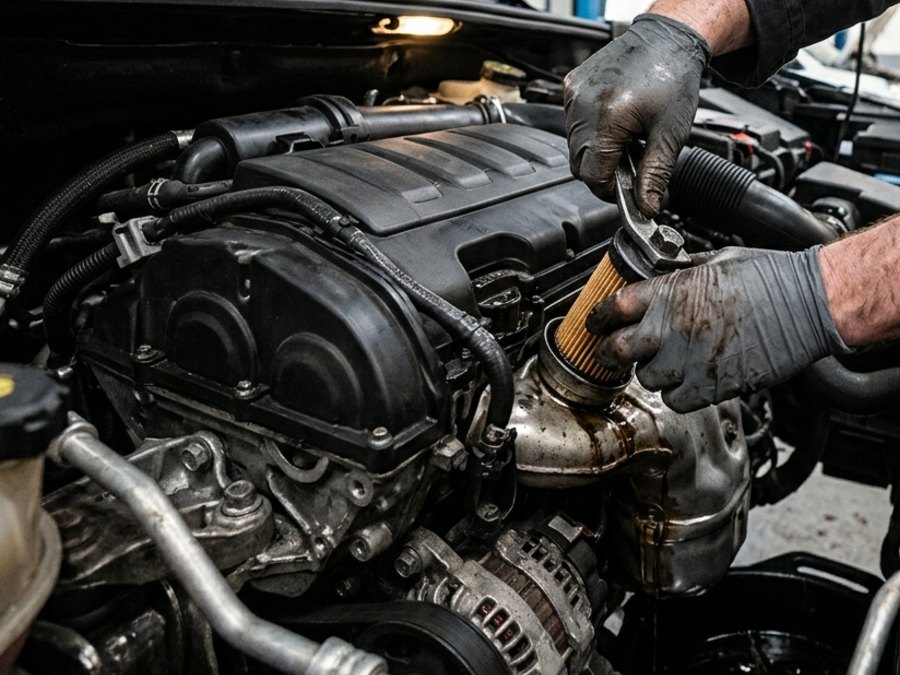
An MOT will not stop your car failing. A service is what does that, because it replaces the things that wear out before they reach the point of failing a test. Doing both in one visit is cheaper than two separate ones, and on a major service the wheels are already off for the brake inspection.
We collect the car from your home or your workplace anywhere around Milton Keynes, test it, ring you with the result and bring it back the same day where the schedule allows. It costs you a phone call rather than a morning off work.