Brakes6 min read
When do brake pads need replacing?
Mileage is the worst guide there is. What actually tells you is a squeal that stops when you brake, a grind that does not, a pedal travelling further than it did — and a measurement.
By Kaine Carter
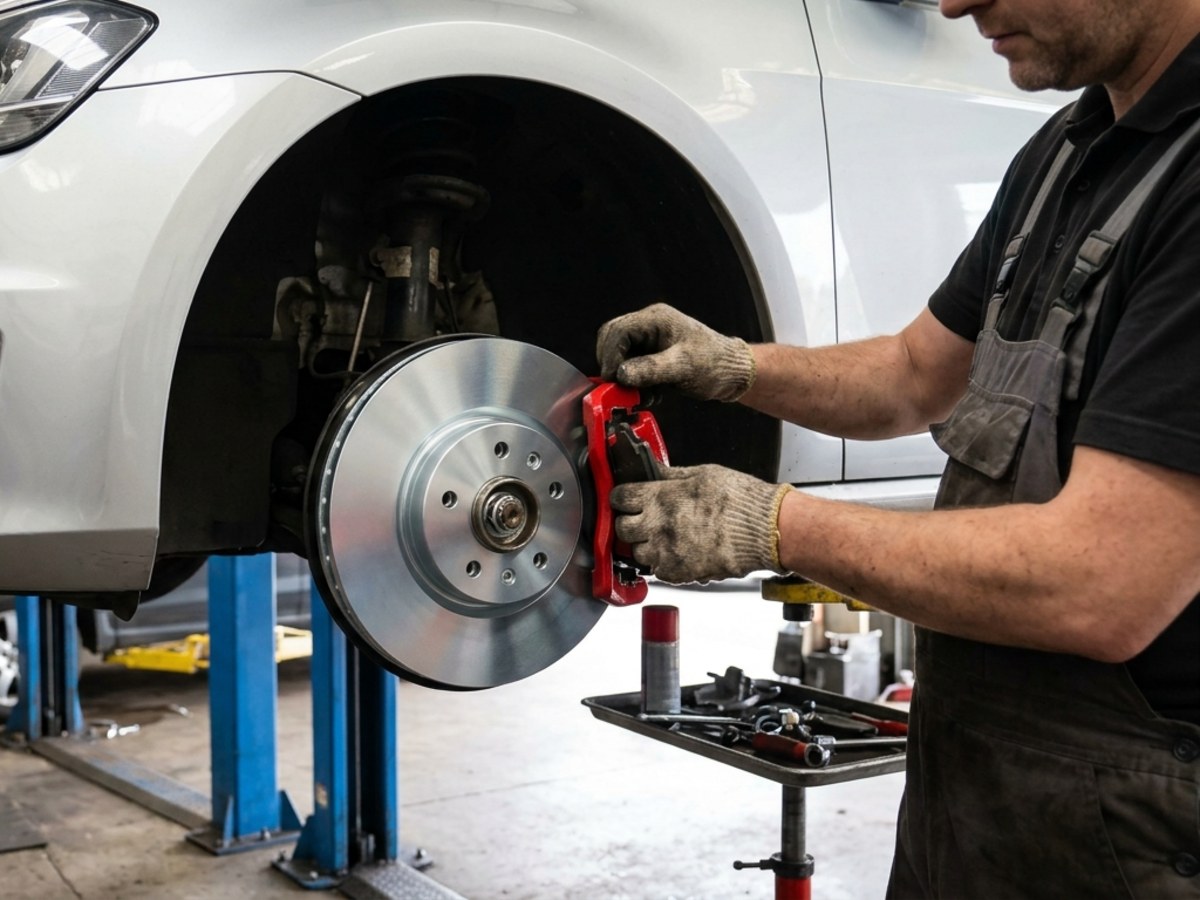
Brakes are the highest-volume job any garage does, and the one where people are most often sold something they did not need — or, more expensively, left with something they did. Both come from guessing instead of measuring.
The four signs worth acting on
A squeal that goes away when you brake
Most pads have a small metal wear indicator built into them. Once the friction material has worn down far enough, that tab starts touching the disc and makes a high-pitched squeal — and because it only contacts when the brakes are off, the noise stops the moment you press the pedal.
That is a pad telling you it has a few hundred miles left rather than a few thousand. It is the ideal time to book, because at this point the discs are usually still fine.
A grinding that gets worse when you brake
Different noise, different problem. Grinding under braking means the friction material has gone and metal is running on metal. Every stop from here is cutting into the disc.
This is what turns an £89 job into a £179 one, because by the time you can hear it the discs are usually scored past saving. It is also a braking performance problem, not merely a cost one, so it is not something to put off to next month.
A pedal that travels further than it used to
Gradual, so it creeps up on you. Worth trusting anyway: if you find yourself pressing further for the same stop, or the car takes noticeably longer to pull up than it did last winter, something has changed.
It is not always the pads. It can be fluid that has absorbed moisture over the years, or a caliper starting to stick. All three are worth finding before they find you.
The dashboard wear light
Many cars have a sensor wired into one pad that completes a circuit as the pad wears through. If yours lights up, it is not a suggestion. It usually monitors one wheel only, so the light means at least that pad is finished — not that it is the only one.
Pads, or pads and discs?
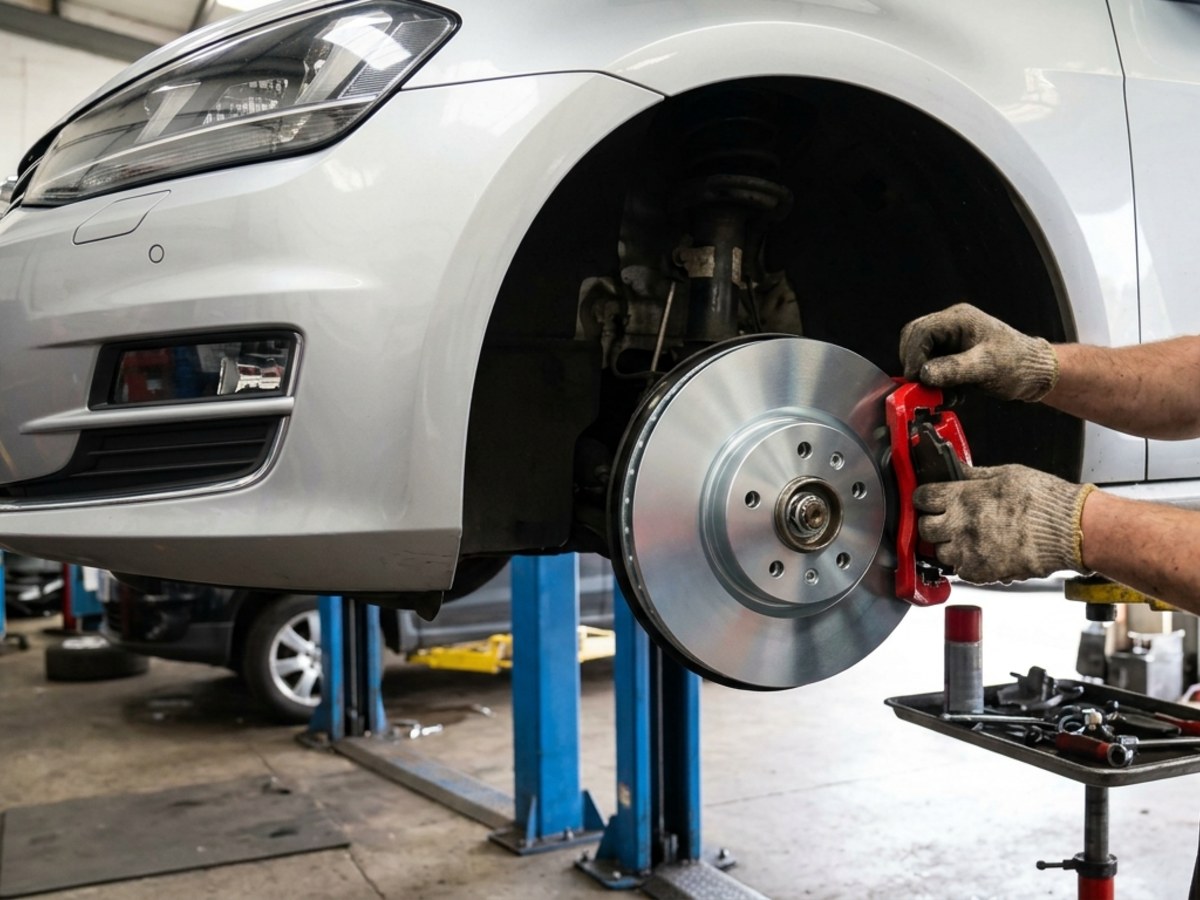
This is the question that decides the price, and the only honest way to answer it is with a micrometer. Discs carry a minimum thickness stamped on them by the manufacturer. Ours get measured with the wheels off, and you get the actual figure against that minimum before anything is decided.
- If the discs have thickness left in them, fit pads on their own. That is the ordinary job, £89 a pair, fitted.
- If they are at or near minimum, or badly lipped at the outer edge, they go with the pads — £179 a pair, fitted, with the pads included in that.
- Fitting new pads to worn-out discs is money wasted. They will not bed in properly and you lose the braking performance you have just paid for.
- Discs always go in pairs, both sides of the same axle together. Replacing one side leaves the car braking unevenly.
A pulsing pedal is almost never a warped disc
It is the most common misdiagnosis in braking. Genuine warping — a disc physically distorted by heat — is rare on a road car.
Far more common is a disc sitting fractionally out of true because the hub face underneath it was not cleaned back when it was fitted. A film of rust on the hub is enough to hold a disc a few hundredths off flat, and that is what you feel through the pedal. The other usual cause is uneven pad material deposited on the disc surface, often from sitting with a hot brake held on.
Both are fixable, and neither necessarily means new discs — which is why it is worth having someone establish which it is before selling you a set.
Why the fronts always go first
The front brakes do most of the work. Weight transfers forward every time you slow down, so the front pads take the majority of the load, and on most cars the fronts are replaced two or three times for every set of rears.
That is why our prices are quoted per pair rather than for the whole car. Quoting four corners when you need two makes the figure look worse and the bill bigger for no reason.
The cheapest time to have it done
During a major service. The wheels come off for the 40 point safety check anyway, so the labour of getting to the brakes is already being paid for. Doing them as a separate visit later means paying for it twice.
Send us the registration and we will confirm the figure for your car before you book. We do brakes across Milton Keynes, Bletchley, Newport Pagnell and the towns around them, and every car is road tested and the brakes bedded in before you collect it.